

Top (Joint Bottom)
HV229Brass
Brass Copper Bronze Mumbai, since 1963
Pital (पीतल) or peetal in Hindi: pital ke bartan. Pitalechi bhandi in Marathi, pital na vasan in Gujarati, pithalai in Tamil, hittale in Kannada.
Brass is an alloy of copper and zinc; utensil brass is about 60–70% copper. The zinc gives it a yellow-gold colour, and it takes a bright polish.
In the kitchen it makes topes, degs, lagans, kadhais and parats; at the table, thalis, glasses and jugs; in pooja, lotas, kalsis and urlis. We make and supply all of them, for home kitchens and commercial ones.
Brass reacts with sour food such as tomato, tamarind, curd and lemon. Cooking vessels are therefore lined with tin (kalai). India’s food regulator, FSSAI, treats brass that is not properly tinned as unfit for food. Re-tin when the yellow metal shows through.
Hand-wash and dry at once. Polish the outside with tamarind, lemon and salt, or pitambari powder. Never scour the tinned inside. Not for the dishwasher, and not for induction: brass is not magnetic.
A magnet should not pull on brass; a strong pull means plated steel. A scratch under the base should show yellow, not grey. Ask for the weight of each size and compare like with like. Only a laboratory test confirms the alloy.
Pital ke bartan is Hindi for brass utensils. In the kitchen they are the patila or tope, the degchi, kadhai, parat and tawa. At the table and in the pooja room, the thali, katori, gilas, lota and kalash. Each type below has its own page, with every size and code.
HV229Brass
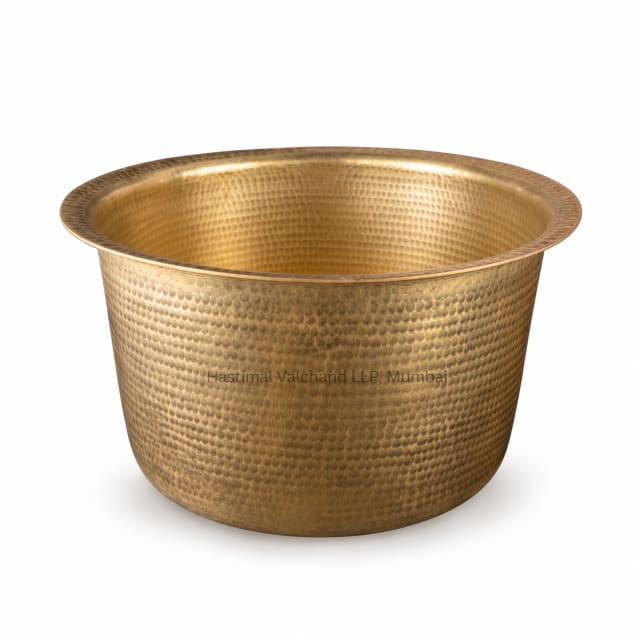
Sizes: 10-28 · 29-36 · 38-42 · +2

Sizes: 8-12 · 13+
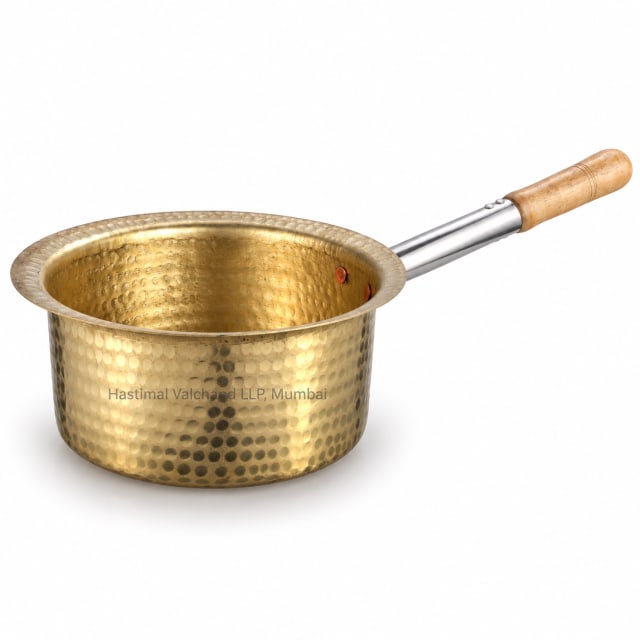
HV220Brass
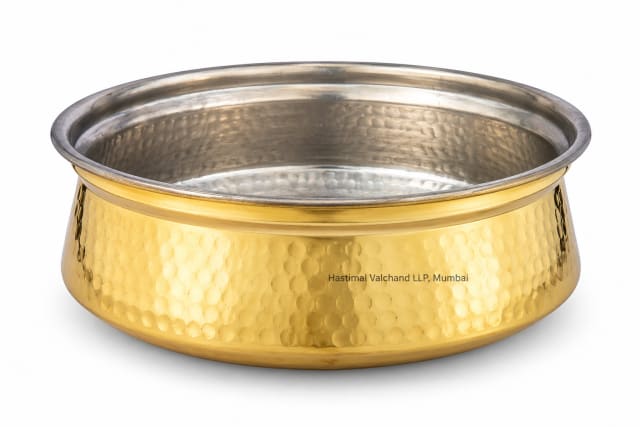
HV123Brass

Sizes: 1-4 · 5-6

HV211Brass
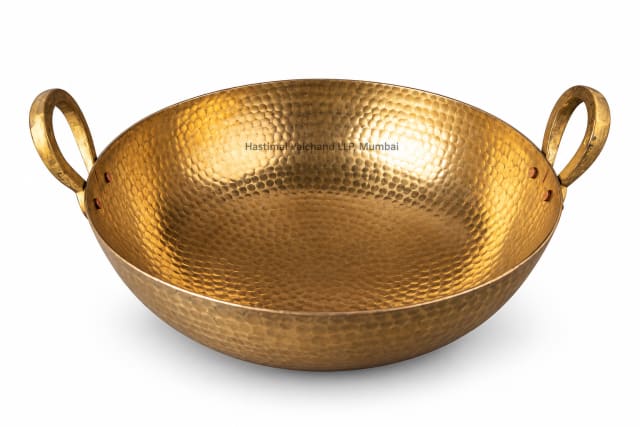
Sizes: 6-7 · 8-14 · 15-24 · +1

HV115Brass

HV208Brass

HV448Brass

HV540Brass

Sizes: 10 · 11-13 · 14 · +4

HV402Brass
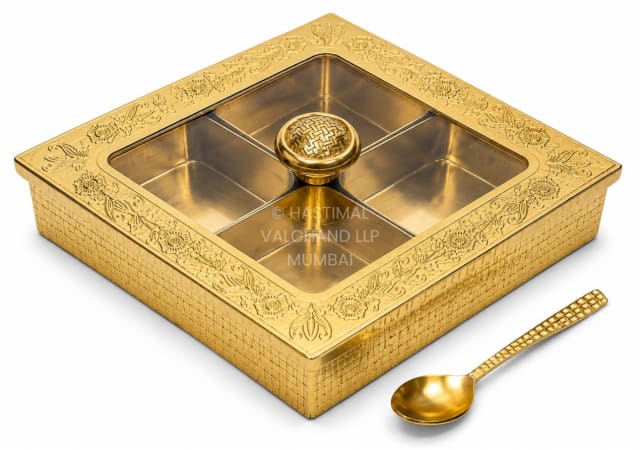
HV509Brass

HV481Brass

Sizes: 1 L · 1.5 L · 2 L · +2

Sizes: 1 · 2 · 3

HV479Brass

HV494Brass

HV513Brass

HV514Brass

Sizes: 6” · 8” · 10”
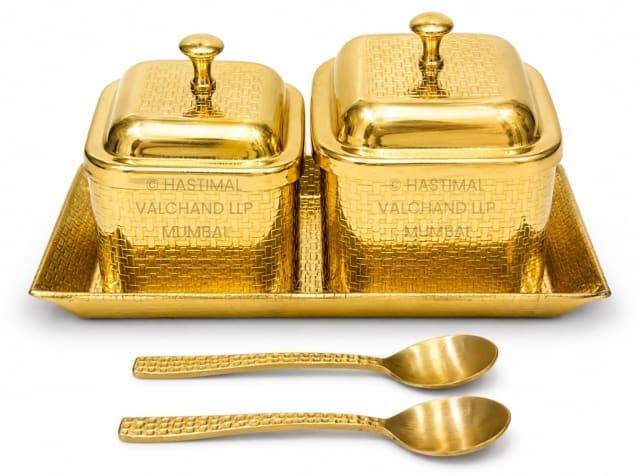
HV508Brass

HV477Brass

HV500Brass

HV501Brass

HV507Brass

Sizes: 1 · 2 · 3 · +1

Sizes: 1 · 2 · 3 · +2

HV454Brass

Sizes: 8 · 9 · 10

HV41Brass

HV42Brass
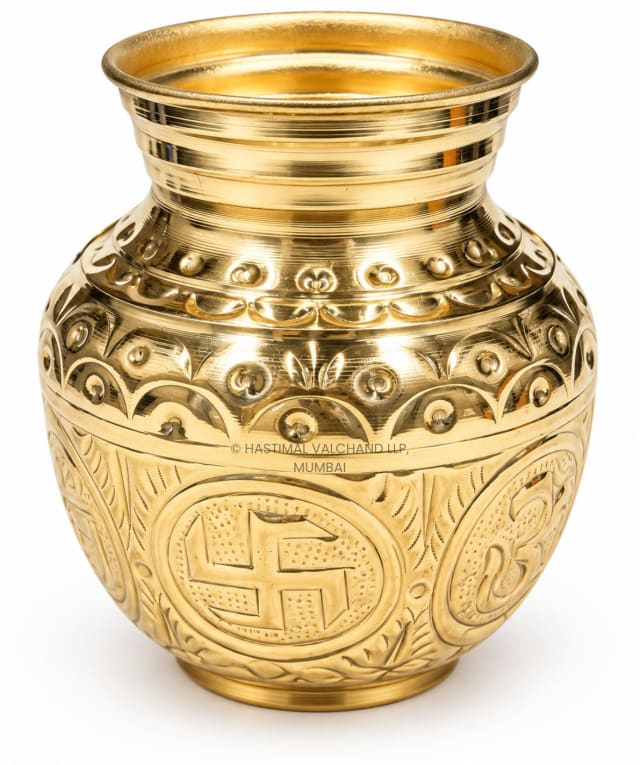
HV484Brass

HV517Brass

HV505Brass

HV542Brass

HV528Brass

Sizes: Big · Small
Bhuleshwar and Kalbadevi in South Mumbai are known today for utensil wholesale shops. We are close by, at Jawahar Mansion, Thakurdwar Road, Mumbai 400002. Buyers who cannot visit can send codes and quantities from anywhere in India.
Some brass alloys contain a little lead, mostly those made for plumbing and machining. We ensure the purity of the metal in every piece we supply for the kitchen and the table. Brass and copper cooking surfaces are still tin-lined (kalai), the traditional practice for cooking. If you need a test report on paper, ask for it with your enquiry.
Kalai is a thin layer of pure tin wiped over the inside of brass and copper vessels. It keeps food from touching the brass or copper directly. A tinsmith heats the vessel and rubs molten tin over the surface. The lining wears with use and is renewed periodically.
Rub the outside with tamarind pulp, lemon and salt, or a paste of vinegar, salt and flour. A traditional powder such as pitambari also works. Rinse well and dry completely, so no water spots form. Never scour a tin-lined inside with acid or abrasives.
Periodically, depending on how often the vessel is used for cooking. Re-tin it sooner if brass or copper shows through the silver lining. The work is done by kalaiwalas, traditional tinsmiths; ask at a utensil market for one nearby. If you need cooking vessels supplied tinned, say so in your enquiry.
No to both. Brass, copper and kansa are not magnetic, and they do not rust as iron does. They tarnish instead: air and moisture darken the surface, and the darkening cleans off.