
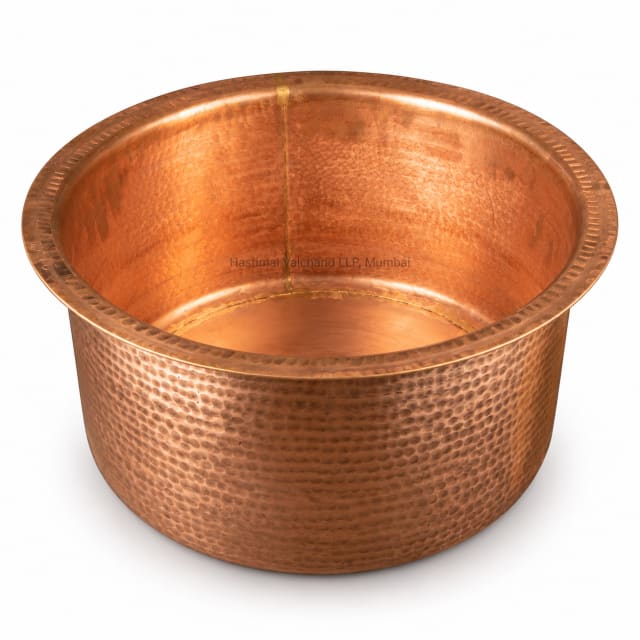
Top (Joint Bottom)
HV261Copper
Brass Copper Bronze Mumbai, since 1963
Tamba (तांबा) or tamra in Hindi: tambe ke bartan (तांबे के बर्तन). Tambyachi bhandi in Marathi, tamba na vasan in Gujarati.
Copper is the pure metal, red-brown when polished. It conducts heat about three to four times better than brass, so it heats quickly and evenly.
Water has long been kept in copper overnight, and tin-lined copper is used for cooking in quantity. We supply copper bottles, jugs and glasses for homes, shops and gifts, and copper handis, degs, topes and lagans for kitchens large and small, from Thakurdwar Road, Mumbai.
Fill bottles, jugs and glasses with plain water, and refill them daily. Heat and acid draw more copper into what you drink. So no hot water, lemon water, juice or buttermilk in copper.
Cooking vessels are lined with tin (kalai); bare copper must not hold sour food. Tin melts at about 232 °C, so never heat a tinned pot empty. Re-tin when the red metal shows through.
Copper darkens with use; that is oxidation, not fake metal. Clean with lemon and salt, or tamarind, rinse and dry. Wipe off any green verdigris before food touches it. Copper is not magnetic, and a scratch shows red, not grey.
Tambe ke bartan is Hindi for copper utensils. Copper is the traditional metal for water: the tambe ka lota, jug, gilas and bottle. In the kitchen, tinned copper makes the handi, degchi and patila. Each type below has its own page, with every size and code.
HV261Copper

HV259Copper
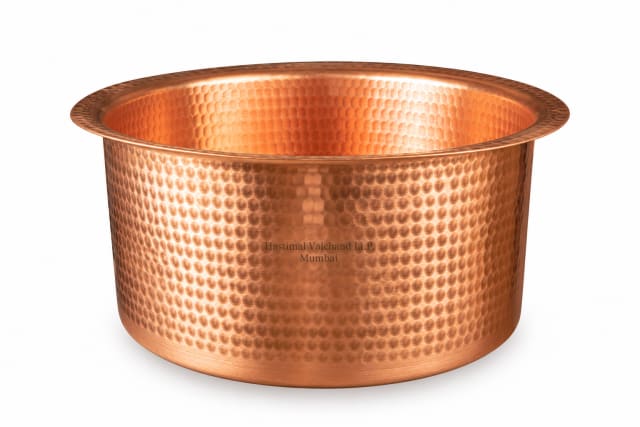
HV260Copper

HV231Copper

HV82Copper
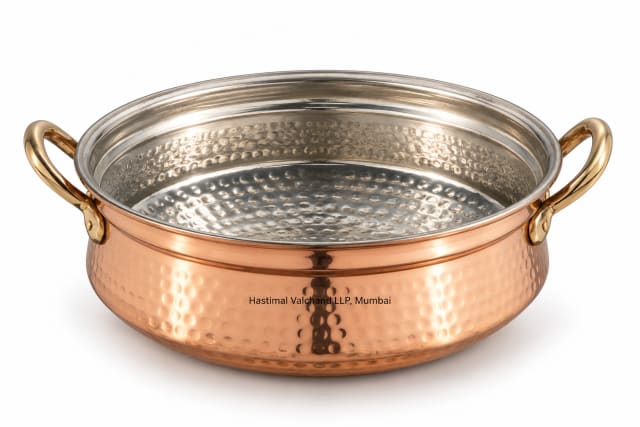
HV124Copper
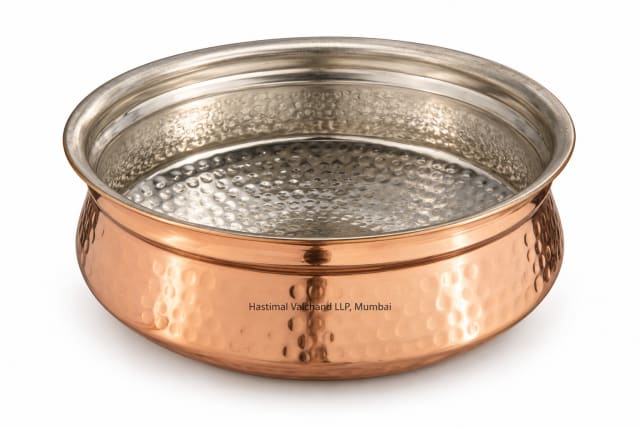
HV125Copper
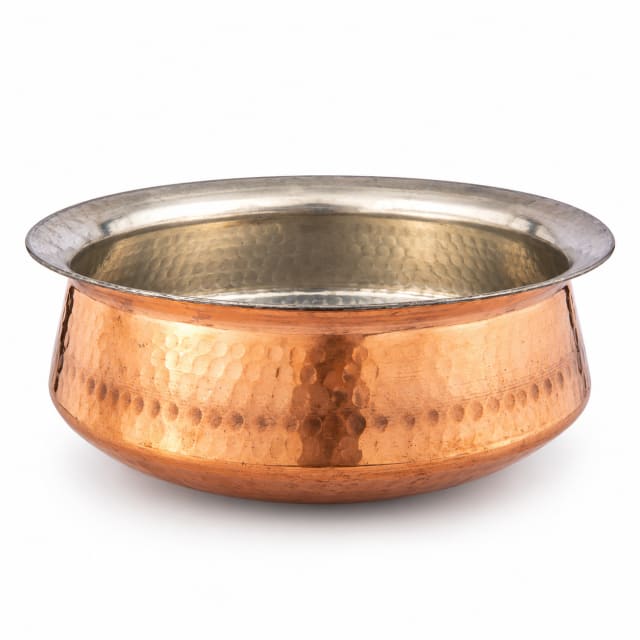
Sizes: 1-4 · 5-6
HV116Copper
HV122Copper
HV136Copper
HV138Copper

Sizes: 13-14 · 15-24 · 25-30
HV249Copper
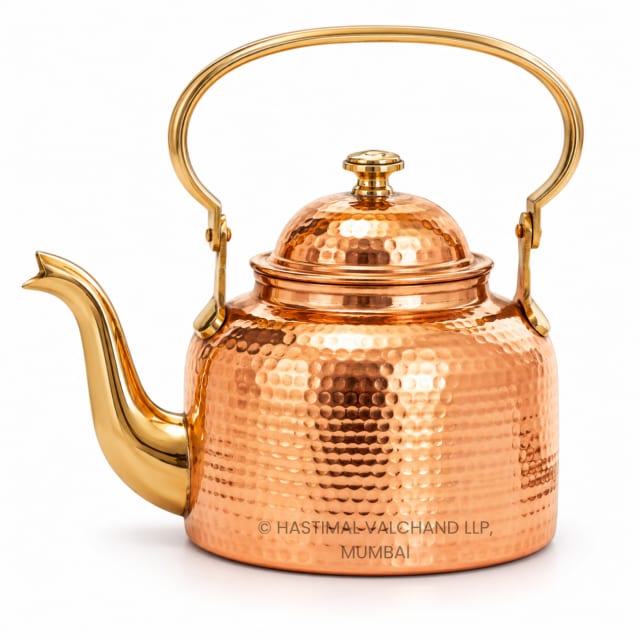
Sizes: 1 L · 2 L · 3 L · +2

Sizes: 750ml · 1000ml

HV464Copper

Sizes: Big · Small
HV345Copper
HV346Copper
HV168Copper
HV190Copper
HV341Copper
HV344Copper

HV545Copper

HV482Copper

HV485Copper
Sizes: 20-24 · 28
HV251Copper
Sizes: 8 · 9 · 10
Only if the surface that touches the food or drink is lined. The US FDA Food Code bars unlined copper from contact with foods below pH 6. That includes tomato gravies, lime drinks and most cocktails. Serve these from lined pieces, and keep unlined copper for water and dry food.
Storing drinking water in copper is a long Indian tradition. In a 2012 laboratory study (Sudha et al.), water kept overnight in copper pots lost the bacteria added to it. Copper in that water stayed within World Health Organization limits. Use plain room-temperature water only; this is general information, not medical advice.
Overnight: fill it at night and drink the water the next morning. Empty and refill it with fresh water every day rather than topping it up. Clean the inside every week or two with lemon juice and salt.
No. Heat and acid both increase how much copper dissolves into the drink. The US FDA Food Code bars copper from contact with foods below pH 6, and lemon water is well below that. Keep copper bottles for plain water at room temperature.
Wash with mild soap and water, then dry at once. To bring back the shine, rub the outside with lemon and salt, or a vinegar and salt paste. Rinse well and buff dry with a soft cloth. Keep acids off any tin-lined cooking surface.
Shake lemon juice and a spoon of salt inside, or vinegar and salt, for a minute. Rinse thoroughly with plain water, then let it dry with the cap off. Do this before first use, then every week or two.