
Kalai: why brass and copper cookware is tin-lined, and when to re-tin it
Written by Hastimal Valchand LLP from the sources listed below, every claim checked against its source · Updated
The short answer
Kalai is a thin lining of pure tin wiped onto the inside of brass and copper vessels, so food touches tin, not the base metal. India's food regulator treats untinned copper and brass containers as unfit for food, so cook only in tinned vessels. The lining wears with use: re-tin when yellow or red metal shows through.
From the catalogue
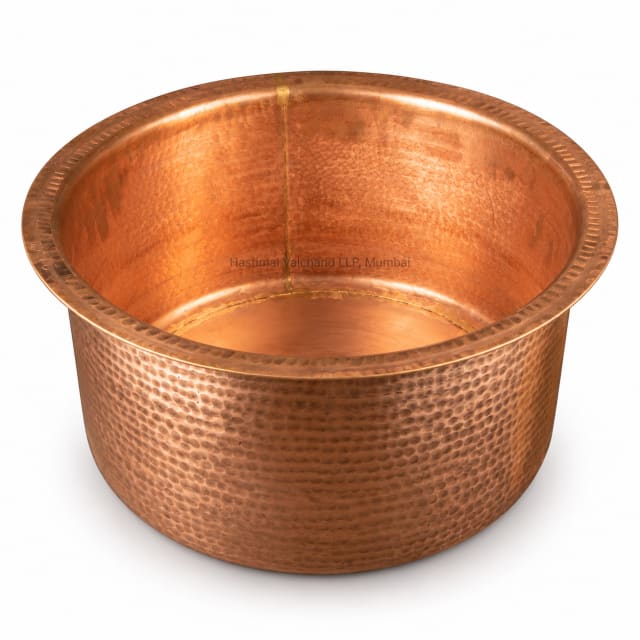
Top (Joint Bottom)
HV261Copper
Baby Handi (Hammered)
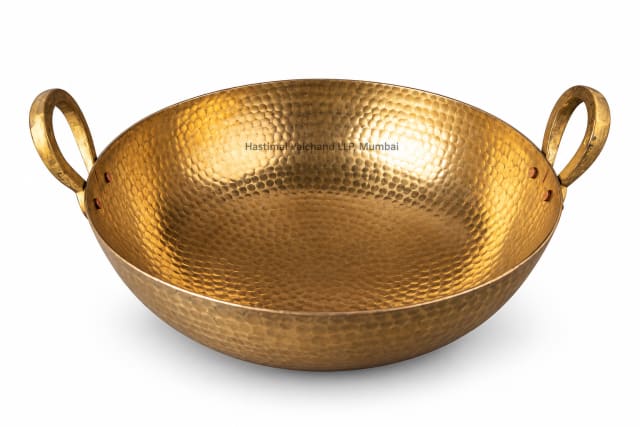
HV540Brass
Tasla Kadhai
Sizes: 6-7 · 8-14 · 15-24 · +1
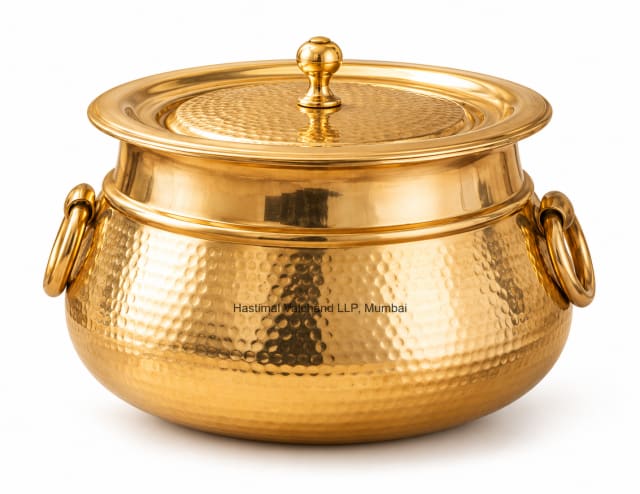
Ring Deg
HV529Brass

01What kalai is
Kalai (qalai, or tinning) is a thin, silvery lining of tin on the inside of a vessel. The craftsman who applies it is a kalaiwala, or qalaigar.
The method has barely changed. The vessel is cleaned and heated over a small furnace until a piece of tin melts on its surface. The kalaiwala then rubs the molten tin across the inside with a cotton pad dipped in nausadar (ammonium chloride).
The craft is old. Kalai is mentioned in the Ain-i-Akbari, Abul Fazl's record of 1590.
02Why cooking vessels need it
Line any brass or copper vessel that will cook or hold food. Both metals react with food, and sour food such as tomato, tamarind, curd or lemon draws out more metal.
FSSAI's Packaging Regulations, 2018 treat copper or brass containers that are not properly tinned as unfit for preparing, packing or storing food. The US FDA Food Code bars copper and brass from contact with food below pH 6.
03Which vessels need it
- Need kalai: tope (patila), handi, deg and degchi, kadhai and tasla, lagan, saucepans and frying pans: anything that cooks or stores food.
- Often left bare: water vessels, glasses and lotas for water, serveware for dry food, and pooja and decorative pieces.
- When you order cooking vessels, say they must be tinned. The quotation should confirm it line by line.
04How to tell it has worn
- Yellow (brass) or reddish (copper) patches show through the silver, usually at the base and where the ladle scrapes.
- The surface turns dull, grey and uneven instead of bright and smooth.
- Food picks up a metallic taste.
05How often to re-tin
There is no fixed interval; it depends on how often the vessel cooks and what it cooks. Re-tin as soon as the base metal shows through.
Reports range widely. Old Delhi kitchens cooking daily re-tinned every few months, according to Sahapedia. Sellers suggest about once a year for regular home use. A festival-only vessel can go far longer.
06Finding a kalaiwala
Kalaiwalas are fewer than they were, but the trade survives in old utensil markets. In July 2026, Telangana Today reported Hyderabad's last kalaiwalas still at work.
Ask at the utensil market nearest you, where shops often know a kalaiwala. Re-tinning is quick: a small vessel takes minutes once the furnace is hot.
07Caring for the lining
- Stir with wooden or soft spoons. Steel ladles scrape tin away.
- Clean the inside with mild soap and water. Acids, abrasive powders and steel wool strip the lining.
- Never heat a tinned vessel empty. Tin melts at about 232 °C, well within a gas flame's reach.
- Wash by hand and dry at once. Dishwasher detergent and heat wear the tin.
Sources
- FSSAI, Food Safety and Standards (Packaging) Regulations, 2018: compendium (2022)
- US FDA, Food Code 2022, §4-101.14: copper and copper alloys with food below pH 6
- Sahapedia, Qalai: a waning art (the tinning process in Old Delhi)
- Wikipedia, Kalai (process): history and re-tinning
- Wikipedia, Tin (melting point 231.9 °C)
- Telangana Today (23 July 2026), Hyderabad's last kalaiwalas keep centuries-old copper tinning tradition alive
General information for buyers, written by HV from the sources above; not medical or legal advice. For a specific product, send us its code with your question.