
Brass, copper or kansa: which metal for which job
Written by Hastimal Valchand LLP from the sources listed below, every claim checked against its source · Updated
The short answer
Copper (tamba) is the pure metal; brass (pital) is copper with zinc; kansa is bronze, copper with tin. Choose by the job: copper for water and even heat, tinned brass or copper for cooking, kansa for eating and serving. None of the three works on induction or belongs in a dishwasher.
Which metal for this job?
BrassWith kalai (tin lining)
Cook only in tin-lined (kalai) brass, because India’s food regulations treat untinned brass as unfit for food.
CopperWith kalai (tin lining)
Cook only in tin-lined copper, because bare copper leaches into sour and acidic food.
KansaPossible, with care
Keep kansa for serving rather than long cooking of sour food, because sources disagree on cooking in it.
SeeHandisTopes and patilasKadhaisDegs and degchis
General guidance from the sources below; not medical advice.
From the catalogue
Top (Joint Bottom)
HV261Copper
Bottle (Yoga)
HV543Copper
Flora Thali
HV501Brass
Lota with Lid (Sheet) Round
HV517Brass


01What each metal is
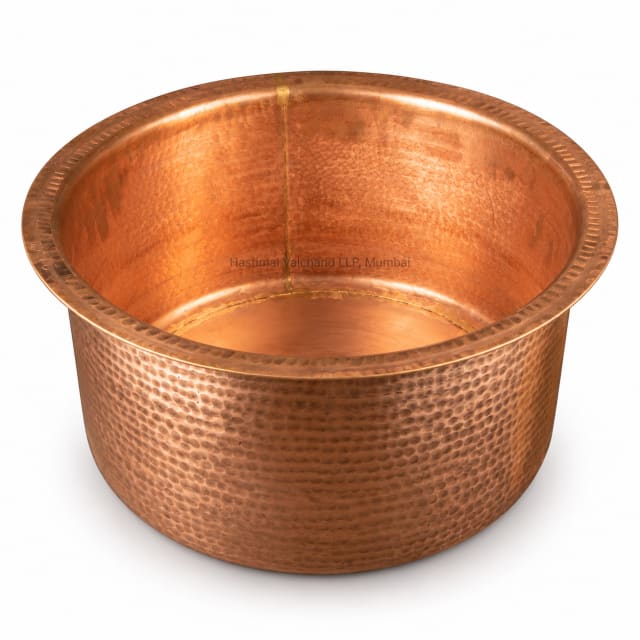
Copper is a pure metal, reddish in colour. In Hindi it is tamba, or tamra in Sanskrit.
Brass, or pital, is copper alloyed with zinc. Utensil brass is usually about 60–70% copper, which gives its yellow-gold colour.
Kansa is bell metal: a bronze of copper and tin. Merriam-Webster defines bell metal as three to four parts copper to one of tin. Indian kansa is traditionally described as about 78% copper and 22% tin, though makers vary the mix.
So all kansa is bronze, but not all bronze is kansa. A label that says only “bronze” tells you less than one that names the alloy.
Hand-making brass and copper utensils is a living craft. UNESCO inscribed the craft of the Thatheras of Jandiala Guru, Punjab, on its intangible heritage list in 2014.
02Side by side
| Compared | Copper (tamba) | Brass (pital) | Kansa (bronze) |
|---|---|---|---|
| Made of | Pure copper | Copper + zinc | Copper + tin |
| Colour | Reddish | Yellow-gold | Pale gold; rings when struck |
| Heat conduction | Highest (about 400 W/m·K) | About a quarter of copper's | Low (about 26 W/m·K) |
| Best for | Water vessels; even-heating pans | Cooking vessels, serveware, pooja | Thalis, katoris (watis), glasses |
| To cook in | Tinned (kalai) inside | Tinned (kalai) inside | Gentle cooking; serve, don't store, sour food |
| Wear | Dents; can be beaten out | Dents; can be beaten out | Hard; can crack if dropped |
| Induction | No | No | No |
03For cooking
Cook only in brass or copper that is tinned inside. Both metals react with sour food, and acid draws metal into it. India's food regulator, FSSAI, treats copper or brass containers that are not properly tinned as unfit for food (Packaging Regulations, 2018).
The US FDA Food Code goes further for restaurants. It bars copper and brass from contact with any food below pH 6, such as vinegar or fruit juice.
Copper conducts heat nearly four times better than yellow brass, so it cooks evenly and responds fast. Brass is the traditional choice for large commercial vessels such as tope, deg and handi.
Sellers disagree on whether kansa needs tinning for cooking. The cautious rule is to cook gently in it and never leave sour food standing in it.
04For serving, eating and drinking water
Kansa is the traditional metal for thalis, katoris and glasses. Buyers value its weight, its soft shine and the clear ring of a well-made piece.
Brass suits serveware for banquets, temples and gifting. For sour dishes such as curd, pickle or tamarind, serve in kansa or tinned vessels, not bare brass or copper.
Copper is the metal for drinking water: bottles, jugs, glasses and lotas. Use plain water at room temperature only. The copper water guide gives the evidence and the limits.
05Cost, weight and wear
Copper and tin cost more than zinc, so copper and kansa usually cost more than brass by weight. Plain vessels are often priced per kilogram, so heavier gauge costs more.
Brass and copper dent rather than break, and a dent can be beaten out. Kansa is harder but less tough, so a hard drop on stone can crack it.
All three tarnish in air. A wash, a quick dry and an occasional polish keep them bright.
06For a shop, hotel or caterer
- Kitchen: tinned brass or copper for cooking vessels. Ask for the weight of each size so quotes compare fairly.
- Service: copper or brass serveware and drinkware; kansa thalis and glasses for traditional dining.
- Retail and gifting: copper bottles and glass sets, kansa thali sets and brass lotas sell year-round. Demand rises before Diwali, Dhanteras and weddings.
Sources
- Merriam-Webster, “bell metal”
- Wikipedia, Bell metal
- Engineering ToolBox, thermal conductivity of metals (copper, yellow brass, 75/25 bronze)
- FSSAI, Food Safety and Standards (Packaging) Regulations, 2018: compendium (2022)
- US FDA, Food Code 2022, §4-101.14: copper and copper alloys with food below pH 6
- Wikipedia, Induction cooking (why copper does not heat on induction)
- Archives of Foundry Engineering (2017), The evaluation of mechanical properties of high-tin bronzes
- UNESCO, Traditional brass and copper craft of utensil making among the Thatheras of Jandiala Guru, Punjab (inscribed 2014)
General information for buyers, written by HV from the sources above; not medical or legal advice. For a specific product, send us its code with your question.