
How brass, copper and kansa utensils are priced: per kg or per piece
Written by Hastimal Valchand LLP from the sources listed below, every claim checked against its source · Updated
The short answer
Plain brass, copper and kansa vessels are priced mainly by weight, so the trade quotes per kilogram. Finished, decorated or assembled pieces are quoted per piece. Metal rates move daily, so compare quotes by asking every supplier for the weight of each size.
From the catalogue
Parat
Sizes: 10 · 11-13 · 14 · +4
Top (Joint Bottom)
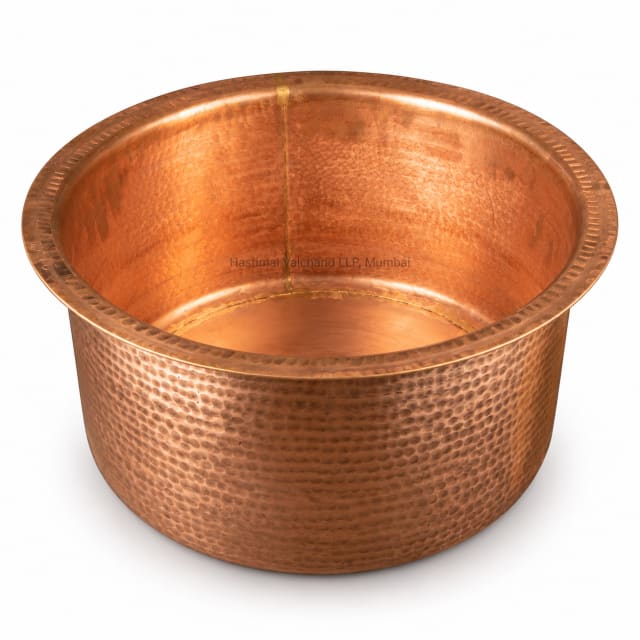
HV261Copper
Lota with Lid (Sheet) Round
HV517Brass
Parat
Sizes: 13-14 · 15-24 · 25-30



01Why weight sets the price
Most of the cost of a plain brass or copper vessel is the metal itself. Two patilas of the same diameter can differ widely in weight.
The heavier one is made from thicker sheet, a heavier gauge. It costs more and usually lasts longer. That is why the trade talks in rupees per kilogram.
02Per kilogram or per piece
- Per kilogram: common for plain vessels sold by weight, such as patilas, parats, handis and degs, especially large sizes.
- Per piece: common for finished or assembled items, such as bottles, gift sets, coffee filters, masala boxes and nakshi pieces. Making and finishing are a large part of their cost.
- Marketplaces mix the two, which makes online prices hard to compare.
03What moves the price
- Metal: copper and tin cost more than zinc, so copper and kansa generally cost more than brass by weight.
- Metal rates: prices follow the daily market for copper, zinc and tin.
- Gauge and size: thicker sheet and bigger vessels weigh more.
- Making: hand-hammered, cast, spun or machine-pressed, plus joints, rims and handles.
- Finish: polish, hammering, etching, nakshi or lacquer.
- Kalai: tin lining adds metal and labour.
- Packing, branding and freight on bulk orders, and GST (5% on HSN 7418 utensils).
04How to compare two quotes
Ask each supplier for the metal, weight and dimensions of each size, the finish, and whether kalai is included. Then divide each price per piece by its weight.
Suppose quote A is 10% cheaper per piece, but its piece weighs 20% less. Per kilogram, A is the dearer quote, and you get less metal.
For a commercial kitchen, a heavier piece at a fair rate is usually better value. It dents less and survives more re-tinning.
05Why rates are quoted, not published
Metal rates change, and most trade orders mix many sizes and finishes. So suppliers, HV included, quote on the day against your exact list.
Send product codes and quantities, and the quotation comes back by weight or by piece for each line.
Sources
- IndiaMART, brass utensils category: listings priced both per kg and per piece (observed October 2026)
- CBIC, Notification No. 9/2025-Central Tax (Rate), 17 September 2025, Schedule I, heading 7418
General information for buyers, written by HV from the sources above; not medical or legal advice. For a specific product, send us its code with your question.