
Drinking water from copper: what the evidence says and how to use it
Written by Hastimal Valchand LLP from the sources listed below, every claim checked against its source · Updated
The short answer
Storing water in copper overnight is an old Indian practice. A 2012 study found copper pots cleared added diarrhoeal bacteria from water within 16 hours, with copper levels within WHO limits. Use plain, room-temperature water, refill it daily, and never use copper for hot or sour drinks.
From the catalogue
Bottle (Yoga)
HV543Copper
Bottle (Prime)
HV538Copper
Bottle (Oreo)
Sizes: Big · Small
Designer Bottle
HV464Copper

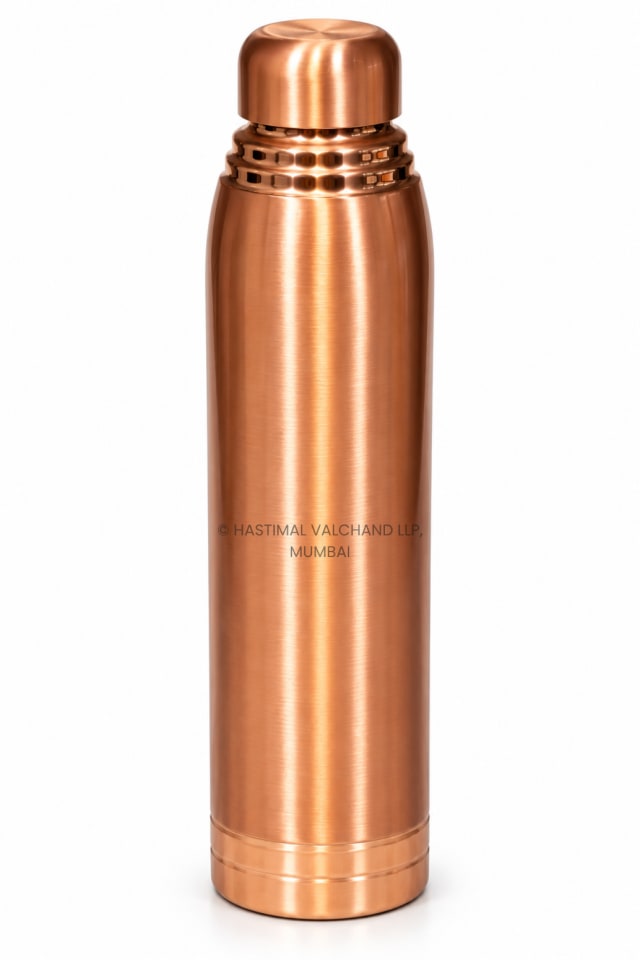


01What the evidence shows
In the 2012 study, researchers added diarrhoea-causing bacteria to water and stored it in copper pots at room temperature. After 16 hours, no bacteria could be recovered.
The dissolved copper measured about 0.18 mg/L. The WHO guideline value for copper in drinking water is 2 mg/L.
That supports copper as a traditional way to store water. It does not show that copper water prevents or cures any illness.
Ayurveda traditionally recommends water stored in copper (tamra jal). That is a traditional practice, not clinical evidence.
02How to use a copper bottle or jug
- Before first use, wash the inside with mild soap, then rinse with lemon and salt and with water.
- Fill it with plain drinking water at room temperature.
- The usual practice is to fill it at night and drink it the next day.
- Empty and refill it daily; don't top up yesterday's water.
- Keep the cap off and let it dry upside down once a week.
03What not to put in copper
- Hot water, tea or coffee: heat raises the copper that dissolves.
- Lemon water, juice, buttermilk or anything sour: acid does the same. The US FDA Food Code bars copper from food below pH 6.
- Milk, sweet drinks and fizzy drinks.
04How much to drink
No health authority sets a daily amount of copper-stored water. Too much copper upsets the stomach, which is why drinking-water limits exist.
Treat copper water as part of your daily water, not all of it. For children, pregnancy or a medical condition, ask your doctor.
05Why it turns dark inside, and how to clean it
A dark brown or black film inside is copper reacting with air and water. It is normal, and it is not a sign of fake copper.
Clean the inside every week or two. Shake it with lemon juice and salt, or vinegar and salt, then rinse well and dry with the cap off.
A green layer (verdigris) is different: it forms with moisture or acid. Clean it off completely before the vessel holds water again.
06What to check when buying
- Capacity in millilitres, not just “1 L”. Marketplace buyers often complain a 1-litre bottle holds 930–950 ml.
- Wall thickness: a bottle that dents when squeezed is thin sheet.
- The cap thread and seal: fill it, close it, and hold it upside down.
- Joints: a one-piece or well-brazed body leaks less.
- Any lacquer or print should be on the outside only. The inside should be bare copper.
- For gifting and corporate orders, ask about boxes and branding with your enquiry.
Sources
- Sudha et al. (2012), Storing drinking-water in copper pots kills contaminating diarrhoeagenic bacteria, J Health Popul Nutr 30(1)
- WHO, Guidelines for drinking-water quality, 4th edition (copper: 2 mg/L)
- NHMRC, Australian Drinking Water Guidelines: copper
- US FDA, Food Code 2022, §4-101.14: copper and copper alloys with food below pH 6
General information for buyers, written by HV from the sources above; not medical or legal advice. For a specific product, send us its code with your question.