
Pots for dum biryani: deg, degchi, handi and lagan
Written by Hastimal Valchand LLP from the sources listed below, every claim checked against its source · Updated
The short answer
For dum biryani, use a heavy pot, tinned (kalai) inside, with a lid that sits flat so it can be sealed with dough; the rice and meat then cook slowly in their own steam. A handi or degchi suits a home or a small restaurant; a deg suits a caterer's quantities. Copper spreads heat most evenly; brass is the heavier, less costly choice.
From the catalogue
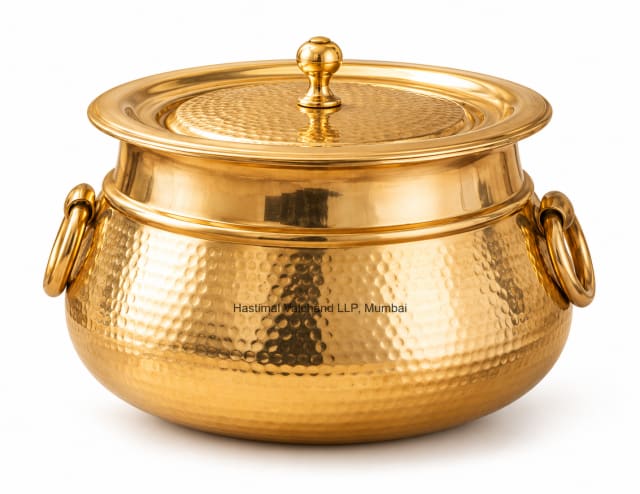
Ring Deg
HV529Brass
Biryani Handi
Sizes: 1 · 2 · 3
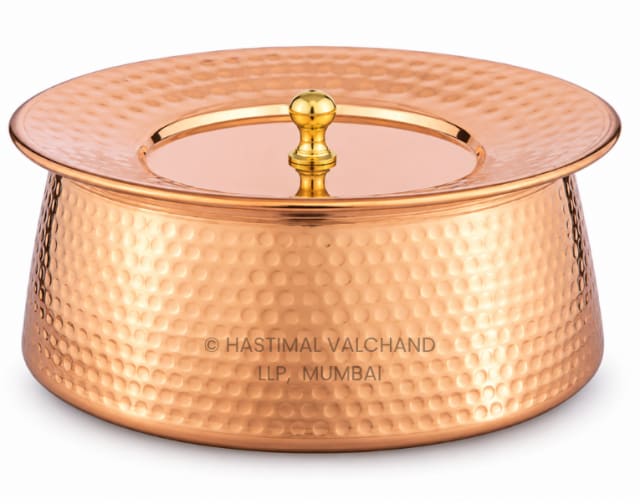
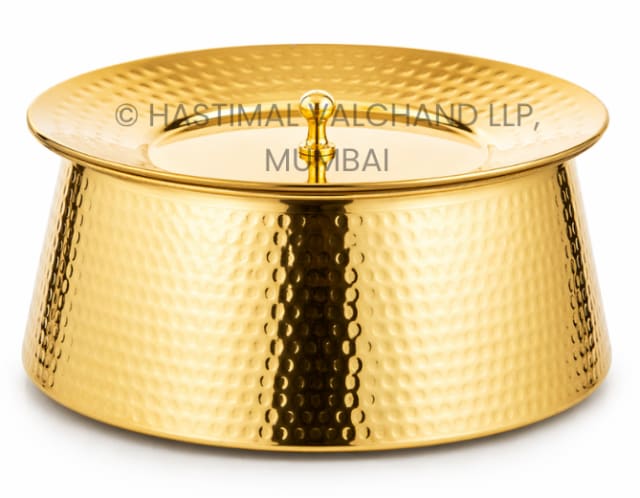
Deg (Degchi)
HV82Copper
Biryani Handi
Sizes: 0 · 1 · 2 · +3

01What dum cooking needs
Dum (dum pukht) is slow cooking in a heavy-bottomed pot, sealed so the steam stays in. The lid is closed with a rope of dough, and the food cooks in its own juices over low heat.
So the pot needs three things: a thick base that will not scorch the bottom layer, a lid that sits flat on the rim, and a body large enough to leave headroom for steam.
02Deg, degchi, handi and lagan: which is which
- Deg: a large, heavy cooking pot, the caterer's and community kitchen's biryani vessel.
- Degchi: a smaller deg, for a home or a restaurant's daily batches. In English, a stock pot or cooking pot.
- Handi: a round-bellied pot with a broad mouth, the classic pot for sealing with dough. Small handis also carry biryani to the table.
- Lagan: a wide, shallow pan, used for dum dishes that are cooked and served in the same vessel.
03Copper or brass
Copper conducts heat about four times better than brass, so it heats evenly and answers the flame quickly: fewer scorched bottoms on a long dum.
Brass is heavier for the same size and costs less by weight. Its weight holds heat steadily, which is why the trade uses it for big degs and topes.
Either way, compare weight for size between sellers: a heavier pot has thicker walls.
04Kalai, and keeping it
Biryani marinades carry curd, lemon and tomato, all sour, so a brass or copper biryani pot must be tinned inside. India's food regulator treats untinned brass and copper food containers as unfit for food.
Tin melts at about 232 °C. Never heat a tinned pot empty, and keep the flame low once the dum seal is on. Re-tin when yellow or red metal shows through.
05Sizes for homes and caterers
Choose by the largest batch you cook, not the average. A caterer usually keeps a run of graded sizes, and reorders the same codes.
Ask for the capacity in litres and the weight of each size, whether the lid is included, and how the handles or rings are fixed: a full deg is heavy.
06Care after cooking
- Soak off the dough seal with warm water; do not scrape the tin.
- Wash with mild soap, rinse and dry at once, inside and out.
- Polish the outside now and then; the inside needs only washing.
Questions buyers ask
Which pot is best for biryani?
A heavy, tinned pot with a lid that sits flat for a dough seal: a handi or degchi at home, a deg for catering quantities. Copper heats most evenly; brass is heavier and costs less.
Can I make biryani in a brass handi?
Yes, if it is tinned (kalai) inside. Biryani marinades are sour, and bare brass should not hold sour food.
What is a biryani deg?
A deg is a large, heavy cooking pot. Caterers and community kitchens use degs for dum biryani, haleem and rice in quantity.
What is degchi called in English?
A stock pot or cooking pot: a deep, straight-sided pot with a lid. A deg is the larger one.
Sources
- Wikipedia, Dum pukht (slow cooking in a sealed, heavy-bottomed pot)
- Wikipedia, Handi (the pot, and sealing its lid with dough)
- Engineering ToolBox, thermal conductivity of metals (copper, yellow brass, 75/25 bronze)
- FSSAI, Food Safety and Standards (Packaging) Regulations, 2018: compendium (2022)
- Wikipedia, Tin (melting point 231.9 °C)
General information for buyers, written by HV from the sources above; not medical or legal advice. For a specific product, send us its code with your question.